Stinger Series Leaders – What’s the difference?
I think it goes without saying, but I use the exact same leaders I sell. I don’t make special versions for myself — when I’m running low, I pull from store stock just like anyone else. And yes, as ridiculous as it sounds, I even pay for what I take. I just get a better price than you do 😎. Perks of owning a tackle shop.
I tend to use what I call my “scratch‑and‑dent” leaders. Every now and then I get distracted and accidentally double‑crimp a hook on the end of a bite leader — and instead of attaching it to the mono like I’m supposed to, I’ll end up attaching a second hook. Dumb, right? Distracted is the better word.
I’m not going to throw the whole thing away, and I’m definitely not going to cut the hook off and sell that bite leader at 4 ft when I advertise 5 ft. So I finish the build and drop it into the “Walter pile.” That’s now my leader.
For a long time, I was in the “smaller is better” mindset. I traveled light and used short leaders. The biggest blacktip I’ve ever landed — a 76‑inch fish — came on a Surf Rig, which is only a 2‑foot mono leader. When I got her on the sand and stuck the rod in the holder, she bit that leader clean in half.
Another favorite phase of mine was running 6‑foot Castable Shark Leaders on deployment drops. I’d laugh every time my teammate, Guy, had to “leader in” a shark with basically zero room for error. It was hilarious to me… not so much to him.
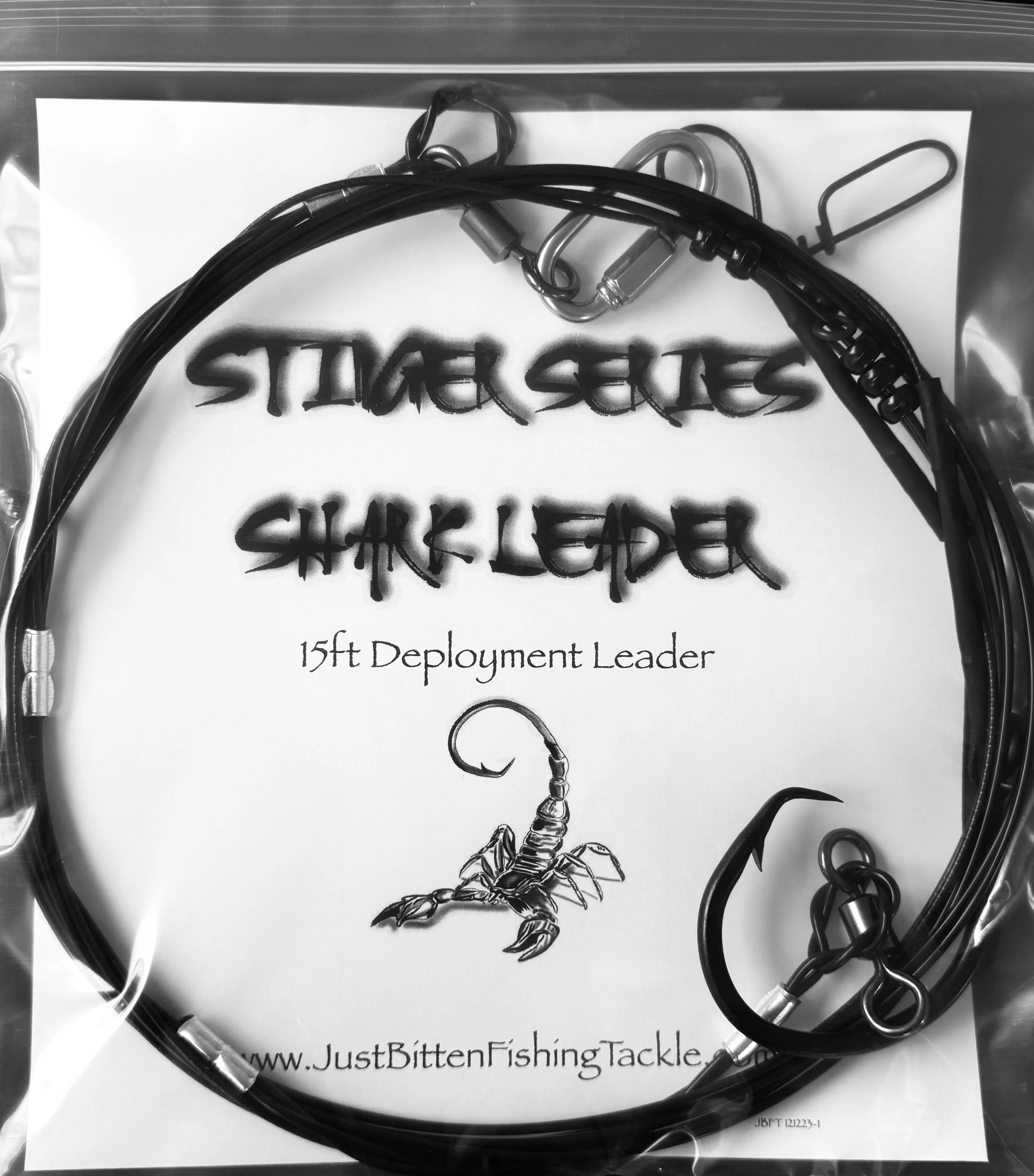
Eventually, I moved up to the 15‑foot Deployment Rigs. Guy definitely preferred those over the six‑footers.
I fish alone a lot, and that’s when I really started appreciating the fifteen‑foot leaders. They gave me plenty of room to work a shark in once it got close. What I didn’t appreciate was how often sharks would chew up the stainless‑steel cable right above the hook. Once that happened, the whole leader was basically trash for the weekend. Sure, I’d coil it up, bring it home, and rebuild it with a new bite leader — but on the beach, it was done.
I wanted a leader I could fix right there on the sand. No downtime. No digging into bags for brand‑new leaders. No wasting money. If I could replace just the bite section on the spot, everything would change.
That’s when the stainless‑steel quick connector idea clicked. With a shackle, I could swap bites instantly. And customers could buy one leader and multiple bite leaders instead of paying for full leaders every time. Even better, I could pre‑make bite leaders with different hook sizes — smaller 18/0s for gafftop or hardhead chunks, 20/0s for bigger baits, and 24/0s for the monster stuff. The shackle even opened the door for double‑hook setups using two bite leaders at once.
I loved the idea, and I decided to build it.
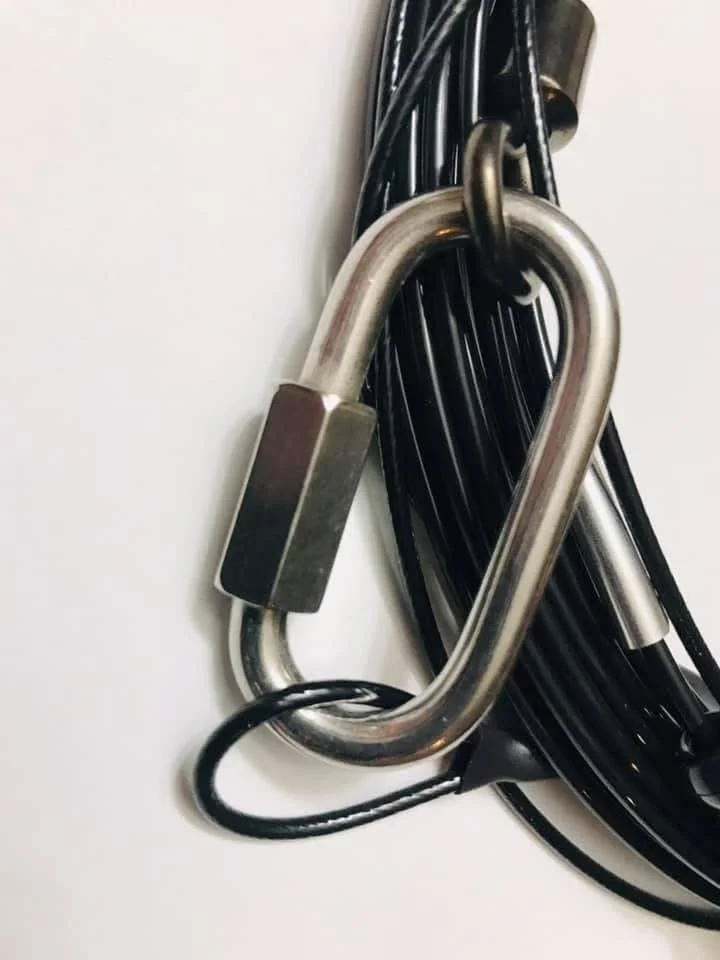
I came up with the name “Stinger” on the way to work one morning. I saw a picture of a scorpion and thought, How cool would it be if the stinger was a hook? That was it — done. The bite leader officially became The Stinger, the removable section that attaches to the main leader body.
From there, I went all‑in. I researched and sourced the materials, built the leaders, designed the logo (and the stickers), created the packaging, and started selling. At first, sales were a little slow because the stainless‑steel connector pushed the price higher than my competitors. But over time, customers started to realize:
1. The overall cost was less
2. They could pre-bait their hooks before their trips and connect them on the beach
3. It was easier to replace their baits when using shark floats
4. They could change hook sizes without changing leaders
5. They could double hook large baits
I think my favorite thing about using them is that the stainless-steel connector is so much easier to hold when leadering in a shark. No more bleeding hands from a shark ripping the crimps through my grip.